为什么猎头能平视人才,为何要仰视客户?
为什么猎头能平视人才,为何要仰视客户?
Nine years ago, in the vibrant city state of Singapore, I placed a purchasing manager, Mr. Bay, with a large Chinese company operating in Singapore.
At the end of his 90-day probation, the client decided to terminate him. The reason first given was “underperformance.” Mr. Bay pulled out three months of solid performance records that told a very different story.
The reason then shifted to “taking bribes from suppliers.” When he asked for evidence, there was no rock-solid ground to substantiate the allegation.
Eventually, it became “disrespecting management.”
We, agency recruiters, were called to the site—not to establish what had actually happened, but to get him to resign. After a full day of pressure, Mr. Bay was coerced by my former boss and the client into submitting a resignation letter stating “personal reasons.”
That moment stuck with me.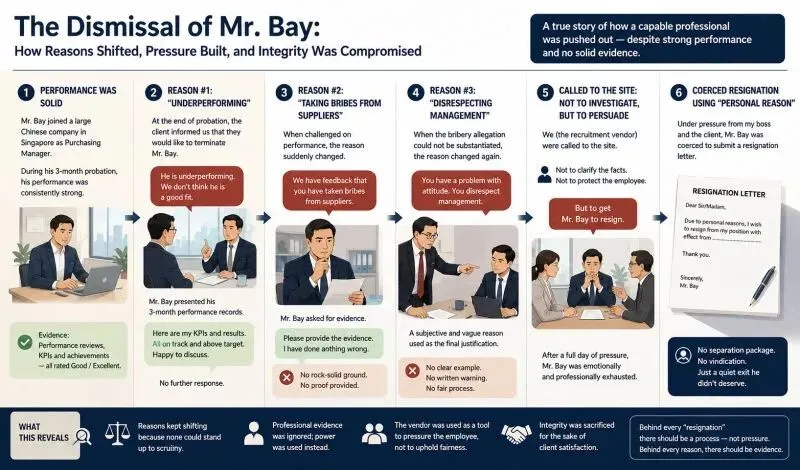 As recruiters, we routinely challenge candidates—their achievements, motivations and inconsistencies. Yet when I applied the same evidence-based standard to the client, the tables turned.
In the aftermath, the client gave us another vacancy. Before taking it on, I asked them to substantiate the previous allegations.
I received my first warning letter: “Disrespect for the client.”
Years later, I realized the real problem wasn’t courage. It was commercial dependency.
When too much revenue comes from one client—or one type of client—loyalty can quietly become constraint-induced loyalty.
The lesson wasn’t to stop serving Chinese companies. It was to rebalance the portfolio: more MNCs and international clients, less overdependence on any single market or client group.
Diversification gives you choices—and choices give you the freedom to walk away.
无国界人才官
Connecting People | Building Industries | Crossing Borders.
本文来自网友投稿或网络内容,如有侵犯您的权益请联系我们删除,联系邮箱:596563534@qq.com 。